Bhutan, famously known as the Land of the Thunder Dragon, is a small Himalayan kingdom nestled along the eastern Himalayas. The country shares borders with China (Tibet) to the north and northwest, and the Indian states of Arunachal Pradesh, Assam, West Bengal, and Sikkim to the east, south, and west. Covering an area of 38,394 square kilometers, Bhutan is similar in size and mountainous landscape to Switzerland.
Protected by towering Himalayan peaks, Bhutan remained isolated from the outside world for centuries. This isolation allowed the country to preserve its ancient Buddhist culture, unique identity, and pristine natural environment. With a population of approximately 742,737. Bhutan is sparsely populated and deeply rooted in tradition.
Bhutan opened its doors to international tourism in 1974, following the coronation of the Fourth King, His Majesty Jigme Singye Wangchuck. Today, it is regarded as one of the world’s most exclusive and culturally intact travel destinations.
Geography and Natural Setting
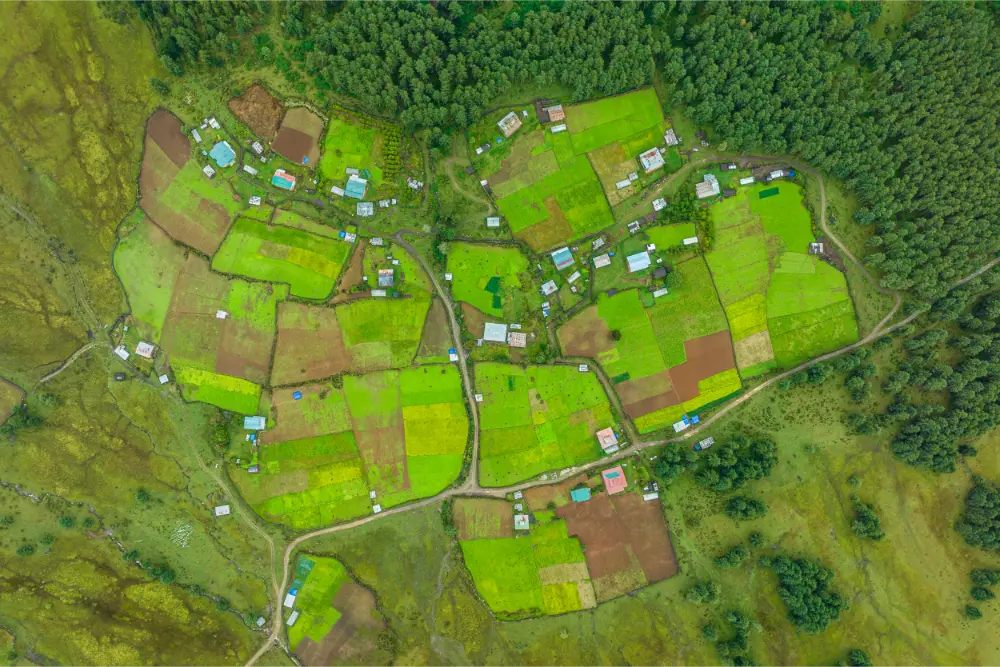
The dramatic Himalayan landscape defines Bhutan’s geography. From subtropical lowlands in the south to alpine mountains in the north, the terrain supports remarkable ecological diversity. Snow-capped peaks, lush valleys, dense forests, glacial rivers, and terraced farmland shape the countryside.
Over 70% of Bhutan remains forested, making it one of the world’s leading countries in environmental conservation and one of the few carbon-negative nations globally.
History of Bhutan
Bhutan’s spiritual and political history dates back to the 8th century, when Guru Padmasambhava (Guru Rinpoche) arrived in Bhutan in 747 AD, introducing Tantric Mahayana Buddhism.
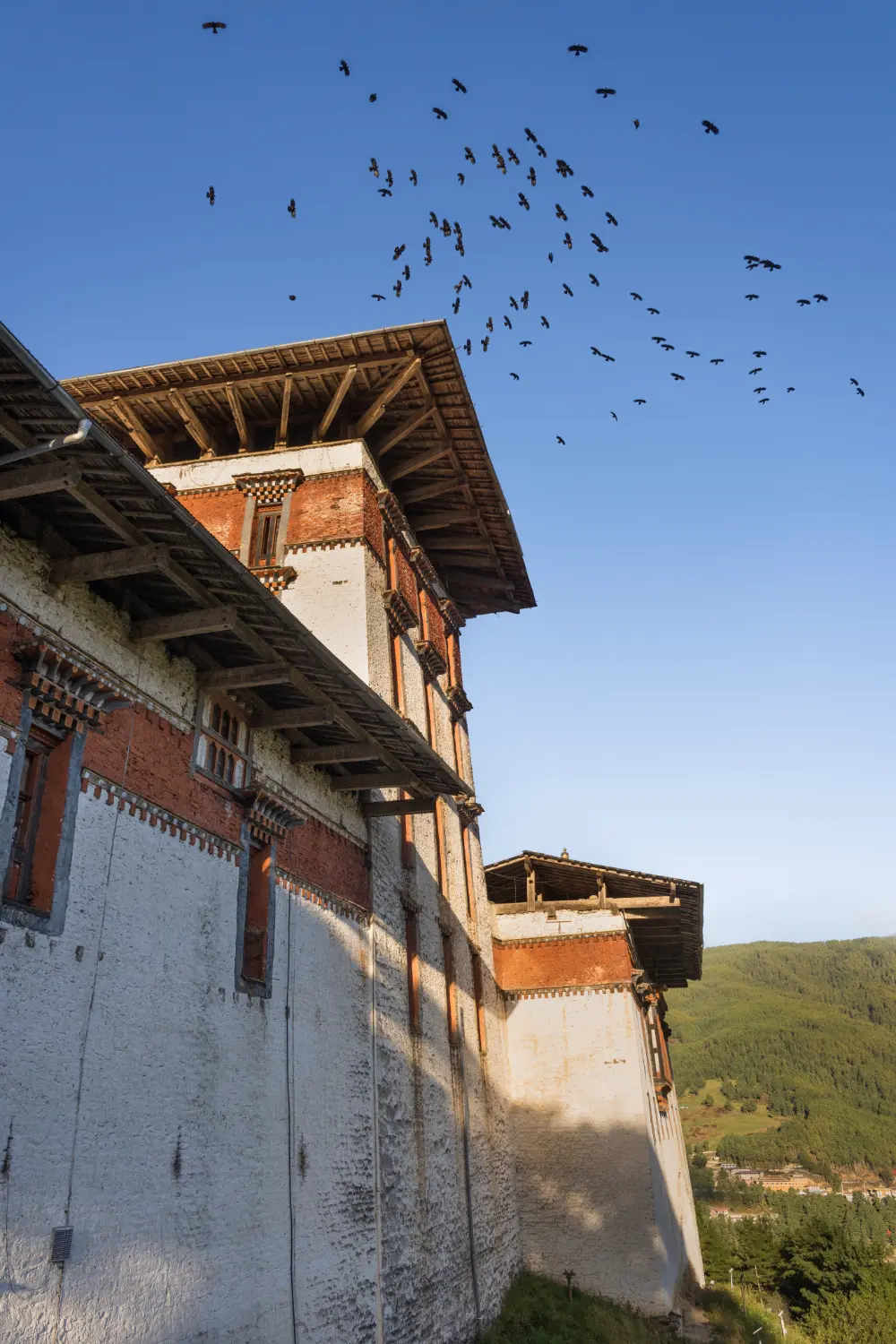
In the 17th century, Bhutan was unified under Shabdrung Ngawang Namgyal, who established a dual system of governance and constructed imposing dzongs to defend and administer the valleys.
Modern Bhutan was formed in 1907, when Ugyen Wangchuck was crowned the first hereditary king. The monarchy guided the nation through peaceful modernization while safeguarding its cultural heritage.
A major milestone occurred in 2008, when Bhutan transitioned from an absolute monarchy to a constitutional monarchy, holding its first democratic elections under the leadership of His Majesty King Jigme Khesar Namgyel Wangchuck.
Religion and Spiritual Life
Bhutan is the only remaining Vajrayana (Tantric) Mahayana Buddhist kingdom in the world. Buddhism shapes every aspect of Bhutanese life, from governance and architecture to daily rituals and festivals.
While the majority of the population practices Buddhism, communities of Nepalese and Indian origin follow Hinduism. Prayer wheels, monasteries, butter lamps, and chanting monks are integral features of both rural and urban life. Religious institutions remain active centers of worship, not historical monuments.
Flora and Fauna
Bhutan’s biodiversity is among the richest in the Himalayas due to its varied climate zones:
- Subtropical lowlands
- Temperate central valleys
- High alpine regions
The country is home to over 7,000 plant species, including the rare Blue Poppy, Bhutan’s national flower. Wildlife includes endangered species and more than 675 bird species, notably the Black-Necked Crane.
Large portions of Bhutan are protected as national parks and wildlife sanctuaries, reflecting the Bhutanese people’s deep respect for nature.
Architecture
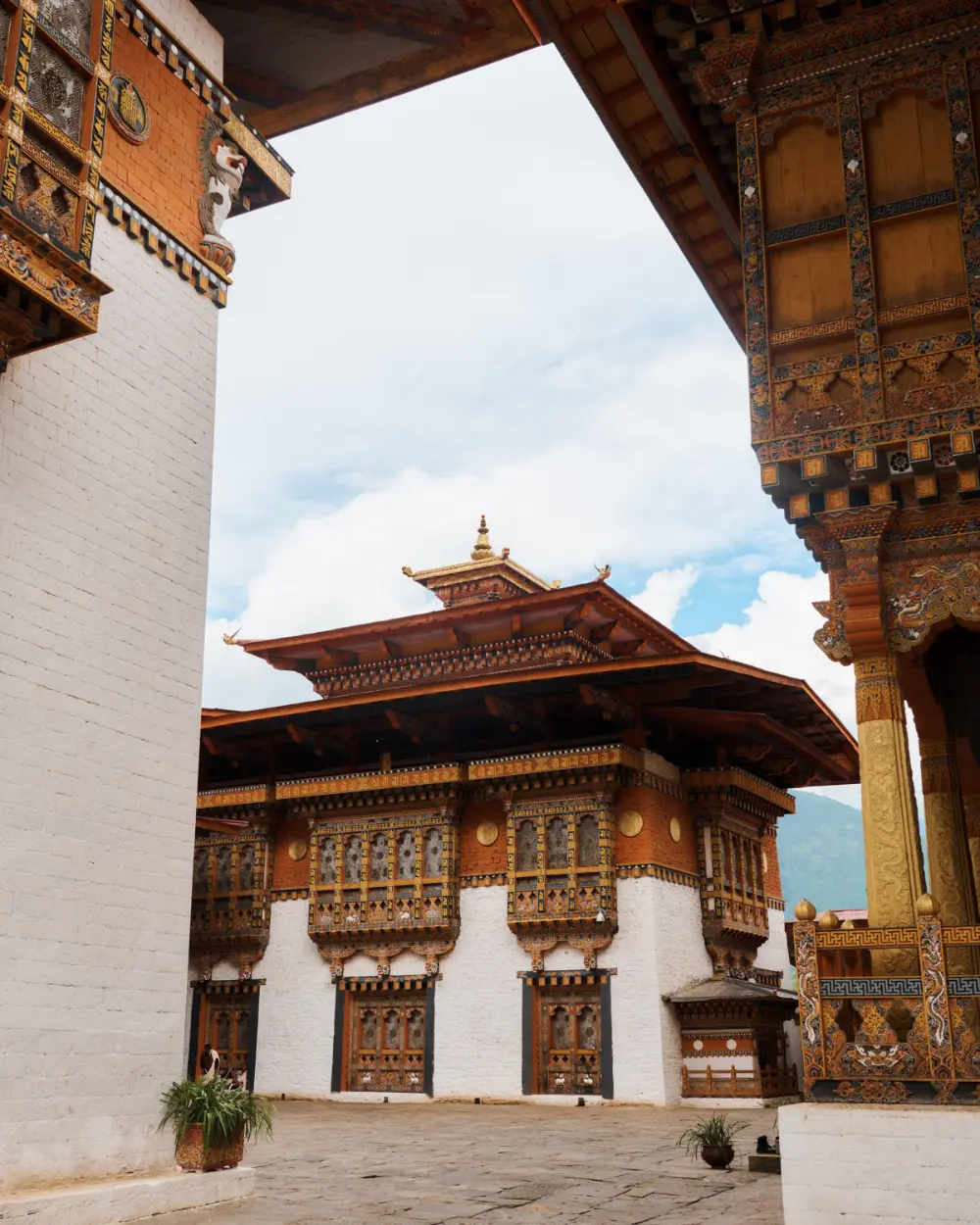
Bhutanese architecture is instantly recognizable and strictly preserved. Traditional structures include dzongs, monasteries, temples, chortens, and farmhouses, all built using time-honored techniques and designs.
The majestic dzongs, constructed in the 17th century without nails or formal plans, serve as administrative and religious centers. Richly painted walls, symbolic motifs, and harmonious proportions define Bhutan’s architectural identity.
Arts and Crafts (Zorig Chosum)
Traditional Bhutanese arts and crafts are collectively known as Zorig Chosum, or the “Thirteen Arts and Crafts.” These skills have been passed down through generations and include:
- Painting and sculpture
- Wood and stone carving
- Weaving and embroidery
- Blacksmithing and metalwork
- Bamboo, paper, leather, and masonry crafts
These art forms are closely linked to Buddhism and everyday Bhutanese life.
Festivals and Celebrations
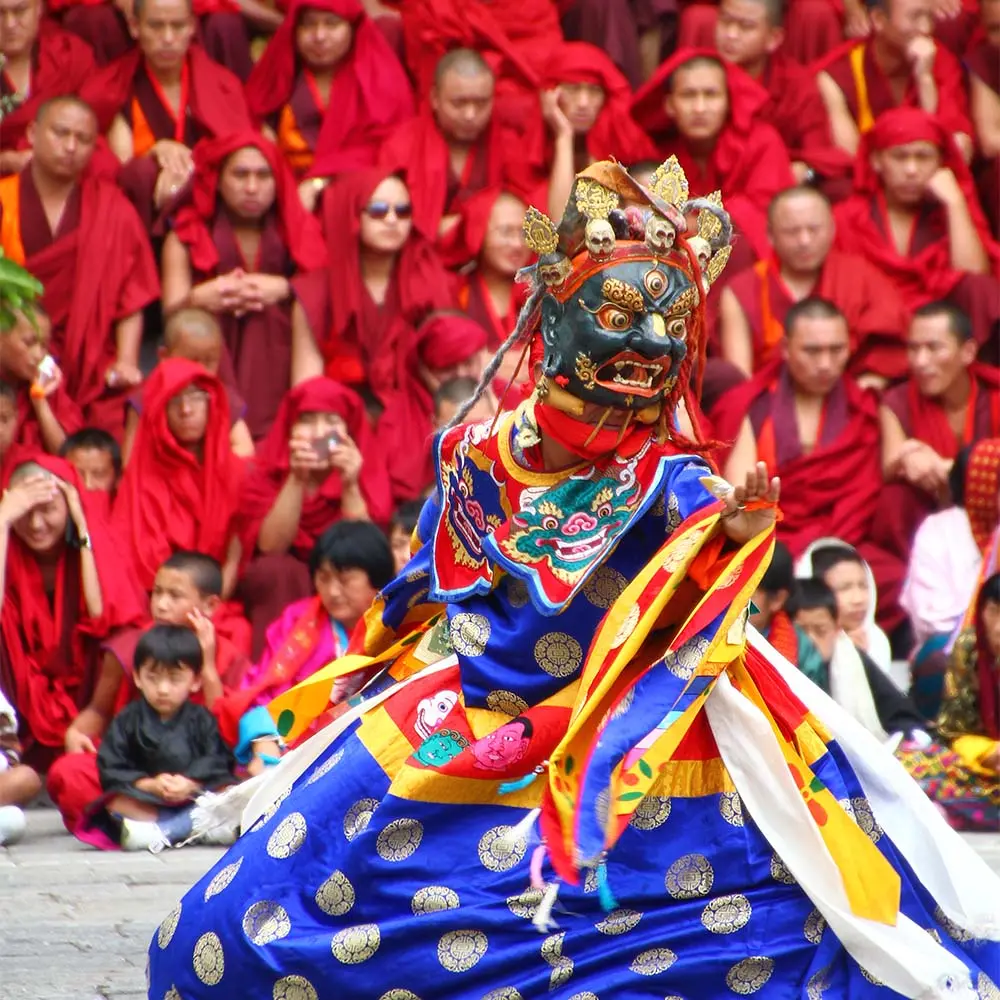
Bhutan’s annual Tsechu festivals are vibrant religious and cultural events held throughout the country to honor Guru Padmasambhava. Tsechus are celebrated on the 10th day of the lunar month and last several days.
The festivals feature sacred Cham dances, performed by monks and lay dancers in elaborate costumes and masks. The performances convey moral teachings, purification rituals, and the triumph of good over evil.
Adding humor and excitement are the Atsaras, traditional clowns who entertain audiences with satire and playful antics. Tsechus are both spiritual gatherings and important social occasions.
Gross National Happiness (GNH)
Bhutan is globally renowned for its development philosophy of Gross National Happiness (GNH), introduced by the Fourth King, His Majesty Jigme Singye Wangchuck. GNH emphasizes balanced development by valuing:
Rather than focusing solely on economic growth, Bhutan places people’s overall well-being at the heart of national progress.